
Sandstone Circle Paving Packs: Best Colours and Finishes for Raj Green, Kandla Grey, Mint and Autumn Brown
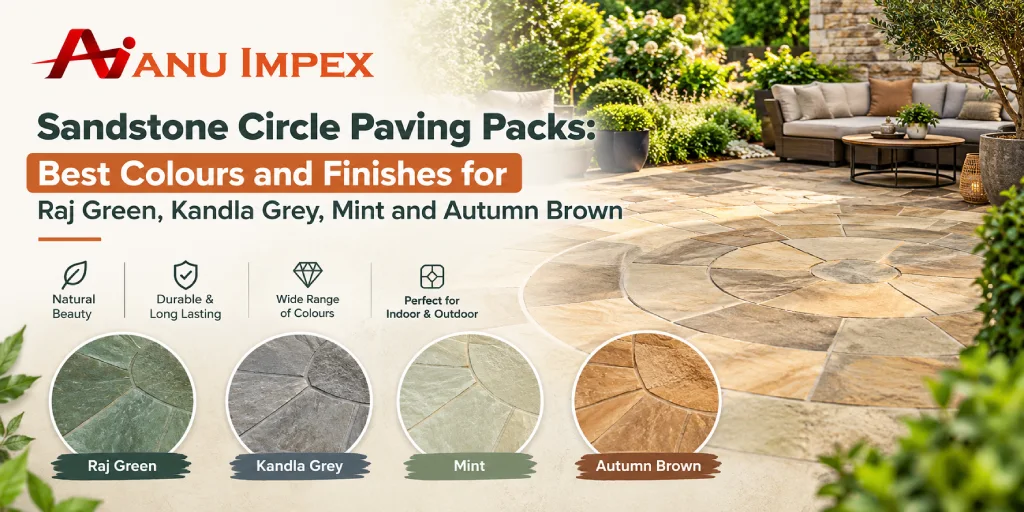
A single sandstone circle can turn a bare patch of lawn into the spot everyone walks toward first. Indian sandstone suits the job because it arrives split into thin, calibrated pieces that lock into concentric rings, and its natural colour range lets the circle either blend with a house or stand apart from it. This guide compares four of the most requested shades, Raj Green, Kandla Grey, Mint and Autumn Brown, then covers finishes, pack sizes and the checks that matter for trade buyers.
The right sandstone circle depends on its surroundings. Kandla Grey suits cool-toned, modern spaces, Raj Green sits well among planting, Mint adds a soft cream-and-pink warmth, and Autumn Brown pairs with brick and red-toned houses. A natural riven face with hand-cut edges is the most popular finish for grip and character.
Why a Sandstone Circle Works as a Garden Focal Point
A circle gives a garden a centre, and that is the reason landscapers keep specifying it. Rectangular patios define an edge; a ring of stone defines a place, somewhere for a bench, a firepit or a table to sit with its own boundary, and it breaks up long straight runs of lawn and border.
Sandstone is the natural material for the shape. Sedimentary stone splits along its bedding planes, so it can be cut into curved segments with a consistent thickness of about 22 mm, which keeps each ring level against the next. Harder stones such as granite need far more cutting effort to produce the same arcs, and the cost shows in the price.
Packs make the job practical. A circle kit comes pre-cut as a centre piece plus several rings of curved segments, so the installer lays it like a jigsaw rather than cutting every curve on site. Most packs also come with a square-cornered option, where extra corner pieces turn the circle into a square or rectangular patio.
Which Colour Should You Choose: Raj Green, Kandla Grey, Mint or Autumn Brown?
Colour is the first decision buyers make and the one customers notice longest. Each of these four stones comes from Rajasthan quarries, and each carries variation that is part of its appeal, so the shade in a catalogue is a guide rather than a guarantee.
Raj Green
Raj Green is a grey-green stone with lilac, rust and brown flecks running through it. It suits planted gardens, where the green tone echoes foliage, and it hides leaf stains and moss better than lighter stones. Expect noticeable variation between pieces, which gives a circle a lived-in look from the first day.
Kandla Grey
Kandla Grey is the cool, even option, ranging from pale silver to mid-grey with occasional brown streaks. It works with render, slate roofs and modern extensions, and it is the safest pick for buyers who want a uniform look. Its restraint also makes it the easiest shade to pair with painted fencing and dark furniture.
Mint
Mint is a cream-to-buff stone with soft pink, grey and sometimes brown tones blended through it. The name comes from the fresh, light impression it gives rather than any green content. It brightens shaded gardens and pairs well with Cotswold-style walls and cream render, though paler stone shows dirt sooner and benefits from regular sealing.
Autumn Brown
Autumn Brown mixes warm browns, rusts, reds and cream in the same slab, so a finished circle carries real depth of colour. It matches brick, terracotta pots and timber pergolas, and it ages gracefully because the earthy tones disguise weathering. The strong variation means buyers should view photos of the full batch before dispatch.
Which Finish Suits a Sandstone Circle Best?
The finish changes grip, maintenance and appearance more than most buyers expect. Four finishes dominate the trade: natural riven, sawn, honed and tumbled.
Natural riven is the split, textured face and the default choice for outdoor circles. Its uneven surface gives good traction when wet, and a pendulum test value of 36 or above indicates low slip potential under UK slip-resistance guidance, so it is worth asking the supplier for test figures.
Sawn faces are flat and machine-cut, giving a cleaner, more contemporary look that suits modern gardens. They are easier to sweep but can feel slick in rain, so they suit sheltered areas better than open lawns.
Honed stone has a smooth, matt surface for terraces beside the house. Tumbled finishes knock down the edges and corners to create an aged, cottage-garden appearance. Edges can be hand-cut, which looks natural and slightly irregular, or machine-sawn, which delivers tighter joints for precise layouts.
What Sizes and Pack Contents Should Buyers Expect?
Circle packs are sold by diameter, and the area follows simple geometry. Common sizes run from 1.8 m to 3.6 m, which gives the following coverage.
Diameter | Approx. area | Approx. weight at 22 mm |
1.8 m | 2.5 sq m | About 130 kg |
2.4 m | 4.5 sq m | About 225 kg |
2.9 m | 6.6 sq m | About 330 kg |
3.6 m | 10.2 sq m | About 510 kg |
Weights use the usual figure of around 50 kg per square metre for 22 mm sandstone, so a container of 20 to 25 tonnes carries roughly 80 to 100 packs of the 2.4 m size. Ask each factory whether the pack includes the centre piece, how many rings it contains and what joint width the layout assumes, since a 10 mm joint changes the final diameter slightly.
Laying is straightforward for a trained installer. A compacted sub-base of roughly 100 mm, a mortar bed and a priming slurry on the back of every piece give a stable result, and pointing with a flexible, frost-resistant mortar protects the joints in cold climates.
What to Look for in a Sandstone Supplier in Rajasthan, India
Quality varies more between suppliers than between stones, so the choice of factory matters as much as the choice of colour. A reliable sandstone supplier in Rajasthan, India will name the quarry area, send photos of current stock and agree a tolerance on thickness, typically within 2 mm, before production starts.
Samples settle most questions. Ask for pieces cut from the batch you will receive, in your chosen finish, and test them for water absorption and slip resistance. Established exporters such as [Brand Name] usually provide lab reports without being chased, and that willingness is a good indicator of how the rest of the order will go.
Wholesale buyers should compare more than the per-pack price. A sandstone wholesale supplier in Rajasthan, India will quote lower rates for full containers, so check the minimum order, the packing method, the Incoterm and the lead time, which commonly runs three to five weeks for standard colours. Crates should hold the pieces on edge with protective interleaving, and wooden packing needs ISPM 15 certification to clear customs in most destinations.
Frequently Asked Questions
How much does a sandstone circle weigh?
What is the best colour of Indian sandstone for a patio circle?
Is Indian sandstone slippery when wet?
How do you maintain a sandstone circle?
How long does it take to ship sandstone circles from India?
The best decision on a sandstone circle is made before the order, with real stone in hand. Request samples of two or three shades in the same finish from your shortlisted factories, lay them on a bright day outdoors and wet them to see how they will look after rain.
