
How to Choose a Bulk Exporter Sandstone Supplier: 7 Checks Before Importing
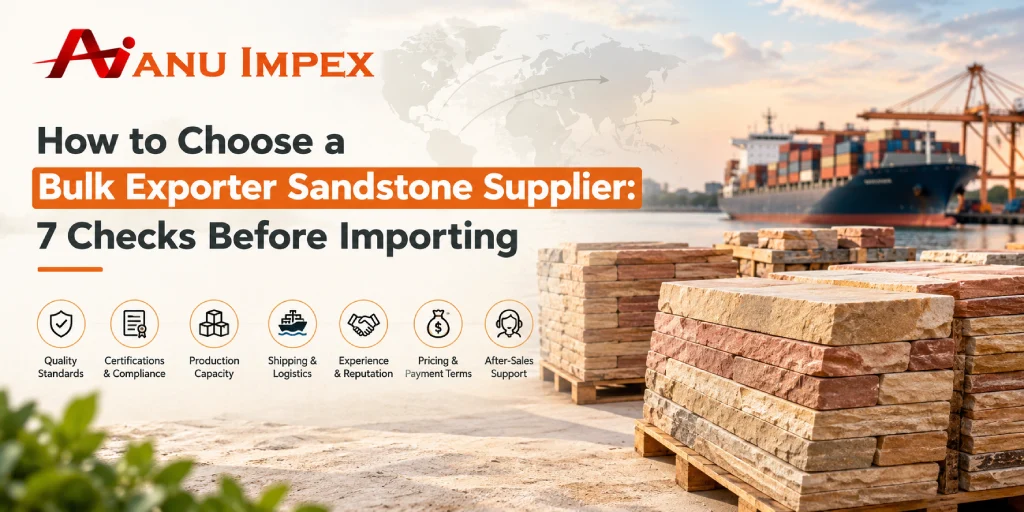
A container of sandstone that looks flawless in a catalogue can arrive with three different shades of buff, chipped corners and a bill of lading that disagrees with the invoice. Almost every one of those problems can be spotted before payment if the buyer knows where to look. This guide covers seven checks that separate a dependable bulk exporter sandstone supplier from a trader with good photographs, using Rajasthan, India’s best-known sandstone region, as the working example.
A reliable bulk exporter sandstone supplier can name its quarry, produce lab reports for absorption and compressive strength, send a sample cut from current production, and show packing and export documents before any money moves. If a supplier hesitates on any of those four points, the order carries risk worth pricing in.
Why Rajasthan Is Where Most Buyers Start
Rajasthan is India’s most recognised sandstone source, which is why buyers looking for a bulk exporter sandstone in Rajasthan usually find dozens of options within a single search. Quarries around Dholpur, Bharatpur, Jodhpur and the Mandana belt near Kota have supplied building stone for centuries, and the cutting yards that grew beside them still employ workers who can judge a block by its sound under a hammer.
Colour follows geography. Dholpur stone runs from cream to soft pink, Bansi Paharpur in Bharatpur district is known for deeper reds, Jodhpur sandstone leans rosy and fine-grained, and Mandana shows up in brown and red tones with a clean, even texture. A buyer who needs a specific shade should ask for the quarry area by name rather than accept a trade label like “autumn” or “rainbow.”
Logistics add to the appeal. Inland container depots near Jaipur and Jodhpur send cargo by rail to Mundra and Nhava Sheva, India’s two busiest container gateways, so a loaded box typically reaches a vessel within a few days. For any bulk exporter sandstone in Rajasthan India, that rail link keeps inland haulage costs predictable.
The Seven Checks at a Glance
Before the detail, here is the full list, since each check below maps to one of these steps.
- Confirm the quarry source and the supplier’s legal standing.
- Test colour and grain consistency across batches.
- Request lab reports for absorption, density and strength.
- Order a sample cut from current production.
- Measure finishing quality and dimensional tolerance.
- Inspect packing and the container loading plan.
- Review export documents, Incoterms and payment terms.
Most buyers do the last check first because price is easy to compare. The earlier steps are where bad suppliers get filtered out, and they cost far less than a rejected container.
How Do You Verify the Quarry and the Stone?
Start with who actually owns the stone. A genuine exporter either operates quarries under a mining lease or buys from named leaseholders and can show invoices to prove it. Traders who resell from unnamed yards cannot guarantee that the next container will match the last one.
Supplier Identity
Ask for the Importer Exporter Code, issued by India’s Directorate General of Foreign Trade, plus GST registration and a company address you can verify by video call. A factory walk-through on camera, showing blocks, gang saws and finished stock, takes ten minutes and tells you more than a brochure.
Colour and Grain Consistency
Natural stone varies, and a good exporter manages that variation instead of denying it. Ask how the factory grades slabs and whether batches are sorted into shade bands before packing. A supplier who photographs the full lot before loading is protecting you from the most common complaint in this trade, which is a delivered pallet that looks nothing like the sample.
Lab Test Reports
Test reports turn opinion into numbers. Ask for water absorption, bulk density, compressive strength and flexural strength results from an accredited laboratory, and check that the report names the stone and the quarry area. Standards such as ASTM C616 classify quartz-based stones and set limits for absorption and strength, so they give you a neutral yardstick when comparing offers.
Absorption matters most for exteriors in freezing climates, since water trapped in the stone expands as it freezes and flakes the surface. Dense, low-absorption stone costs more for good reason.
What Should Samples, Finishing and Packing Look Like?
A sample is only useful if it comes from the same lot you will receive. Ask for a piece cut from current production, not a polished showroom tile, and request two or three pieces from different blocks so you can see the real spread of colour. [Brand Name] and other established exporters usually ship sample sets within a week and will label each piece with its quarry and finish.
Finishing and Tolerance
Finishing quality shows in the edges and the thickness. For calibrated tiles, a tolerance of about 1 to 2 mm in thickness is a sensible expectation, and sawn or machine-cut edges should be square when checked against a straight edge. Hand-split finishes will vary more by nature, so agree the acceptable range in writing.
Packing and Loading
Packing is where stone gets damaged, and it is the check buyers most often skip. Sheets and tiles should be stacked on edge or interleaved with protective material, then packed in wooden crates or on strapped pallets. Wooden packing for export needs ISPM 15 treatment and a stamp to clear customs in most countries, so ask for the certificate.
Weight sets the loading plan. Sandstone usually weighs around 2.2 to 2.5 tonnes per cubic metre, and a 20-foot container typically carries about 20 to 25 tonnes of stone before weight limits apply. A competent exporter will send a loading plan showing pallet count, gross weight and how blocks are braced, which is also how you catch a supplier who quotes a volume the container cannot hold.
How to Compare a Bulk Exporter Sandstone Supplier on Price and Terms
The lowest quote is often the one that leaves something out, so compare offers line by line. Confirm whether the price is per square metre, per tonne or per container, which thickness and finish it covers, and whether crating, loading and port charges are included.
Incoterms decide who carries the risk at each stage. FOB Mundra means you pay for sea freight and insurance; CIF to your port moves those costs to the exporter but you still carry some risk once goods are on board. Pick the one that fits your freight forwarder relationships rather than the one that looks cheaper on paper.
Payment terms reveal how much a supplier trusts its own product. A letter of credit or an advance of around 30 per cent with the balance against copies of shipping documents is common practice. Be wary of any request for full payment upfront from a company with no verifiable history.
The document set should arrive complete: commercial invoice, packing list, certificate of origin, bill of lading and the ISPM 15 certificate for wood packing. Missing papers delay customs clearance, and port storage charges add up fast.
Frequently Asked Questions
Who is the best bulk exporter of sandstone in Rajasthan?
What is the minimum order for bulk sandstone export?
How long does it take to import sandstone from India?
How do I check sandstone quality before shipping?
Which sandstone colours come from Rajasthan?
The best protection when choosing a bulk exporter sandstone supplier is a short, structured trial before the main order. Request samples from two or three shortlisted factories in the same stone and finish, test them side by side for absorption, edge quality and colour spread, and read the lab reports against what the stone actually looks like.
